PRIME
Tattoo Preparation Serum
30 mL · 1.0 fl oz
Skin that takes ink evenly, for sharper lines and fuller colour.
5.0 (9)1.050 kr
Complimentary shipping over 1.350 kr. VAT and duties included.
Country/region

A tattoo is more than ink on the surface. It is a precise process that places pigment into the dermis, the skin’s second layer, where the body holds it in place as the skin heals.
Understanding that science is the key to caring for tattoos properly. It is also the reason SKINGRAPHICA® exists, to prepare, protect and care for tattooed skin at every stage of its life.
How it works
A tattoo machine punctures the skin hundreds of times a minute, leaving a tiny droplet of ink in the dermis with each one.
Every puncture is a small wound. Immune cells called macrophages arrive to clean up and engulf the ink, but the particles are too large to break down or carry away.
Over weeks to months the inflammation calms. The ink stays in the dermis, held inside macrophages and fibroblasts, and the design shows through the skin above it.
Depth
The epidermis renews itself constantly and sheds its cells. The dermis beneath it is far more stable, which is why ink has to land there to last.
Depth of the dermis in most tattooable areas, and roughly where the needle aims.
Punctures a minute from a tattoo machine, each leaving a droplet of ink.
Layers that matter. The epidermis that sheds, and the dermis that holds the ink.
Ink left in the epidermis is shed with the skin, and the tattoo fades within weeks.
The puncture channels in the dermis hold the ink, and the skin’s elasticity seals it in as the needle exits.
Ink pushed into the fatty layer below spreads under the skin. This is a blowout, and it makes the design look blurred.
Why tattoos stay
Some pigment is taken up by fibroblasts, stable cells in the connective tissue. Most is held by macrophages. When one of those cells dies it releases its ink, and a neighbouring macrophage captures it again.
This cycle of capture, release and recapture can repeat many times, yet the tattoo looks essentially the same. A small amount of very fine pigment does travel through the lymphatic system, but the vast majority stays where the artist put it.
A tattoo lasts not because the ink never moves, but because the body keeps trapping it in the dermis.
Before the needle
Artists clean and often shave the area to remove oils and dead skin. Hydrated, balanced skin helps the needle glide and the ink sit evenly, which sets the stage for sharper lines and a calmer heal.
Stage 01, before your appointment
PRIME hydrates and balances the skin’s surface in the 21 days before your appointment, so your artist starts on a well-prepared canvas.
1.050 kr
Colour
Tattoo ink is an insoluble pigment in a carrier fluid. The chemistry of each pigment changes how it behaves in the skin over the years.
Usually carbon or iron oxide, and the most stable. It holds longest, though very old black can soften towards a bluish charcoal.
Brighter, more translucent and more sensitive to UV. These hues lose intensity sooner and need more frequent touch-ups.
The quickest to fade. White highlights can become hard to see, or turn slightly yellow, within 5 to 10 years.
Often a blend of yellow and blue. As the yellow fades the blue can take over, so aqua greens drift bluer or darker.
Can lose its red component over time and skew towards blue.
Many older colours relied on heavy metals for brightness and permanence. Reds often contained mercury sulfide or cadmium, blues and greens copper or cobalt salts, yellows cadmium and whites titanium or lead oxide. These are very stable in the skin, but more likely to trigger reactions, and red has long been the colour most associated with persistent itch or rash.
Generally, yes. Regulation and industry standards have moved many inks towards lab-made organic pigments, such as the azo and quinacridone pigments also used in printing and art paints. Any ink can still cause sensitivity in some people, so talk to your artist if you have reacted before.
Pigments rarely change colour entirely. Subtle shifts happen as one part of a blend fades faster than another, or as particles disperse in the skin. The changes are gradual, which is why an old tattoo can look slightly different from day 1 without ever looking wrong.
Ageing
Sunlight is the biggest cause of fading and colour change. Ink quality, placement and your own skin play their part too. Areas with constant friction, such as fingers, hands and feet, blur and fade faster.
The protocol
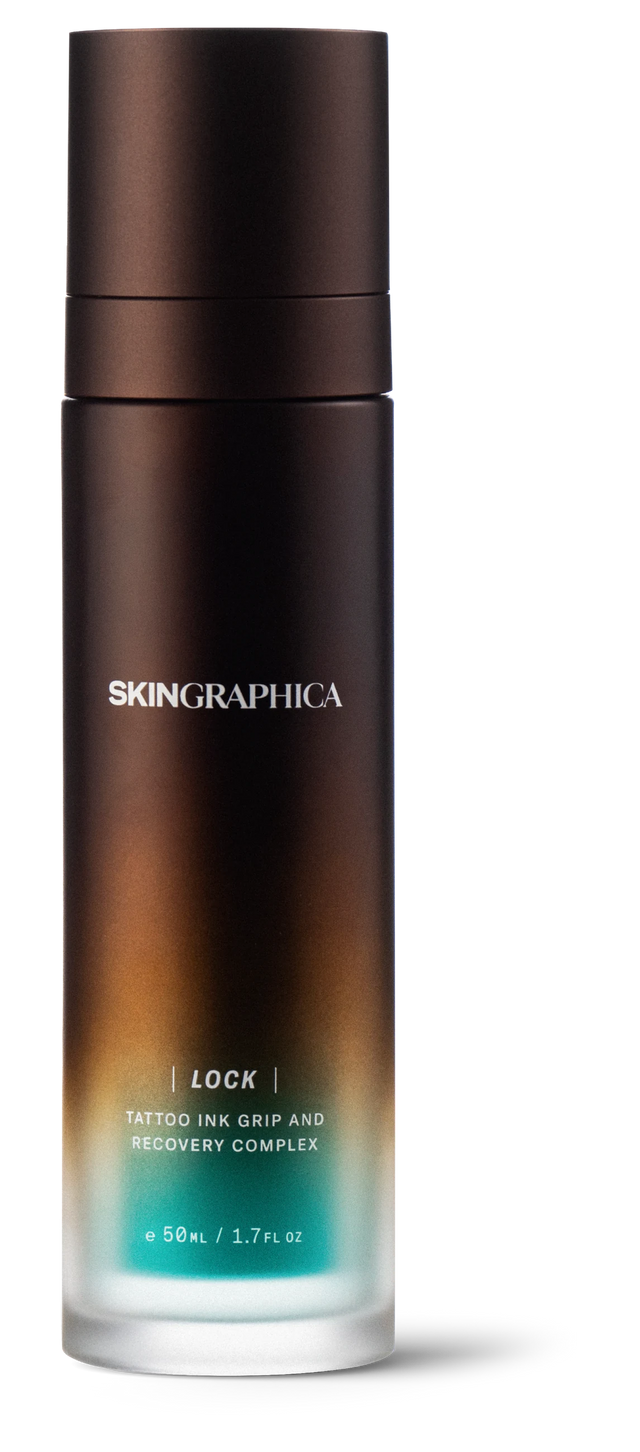
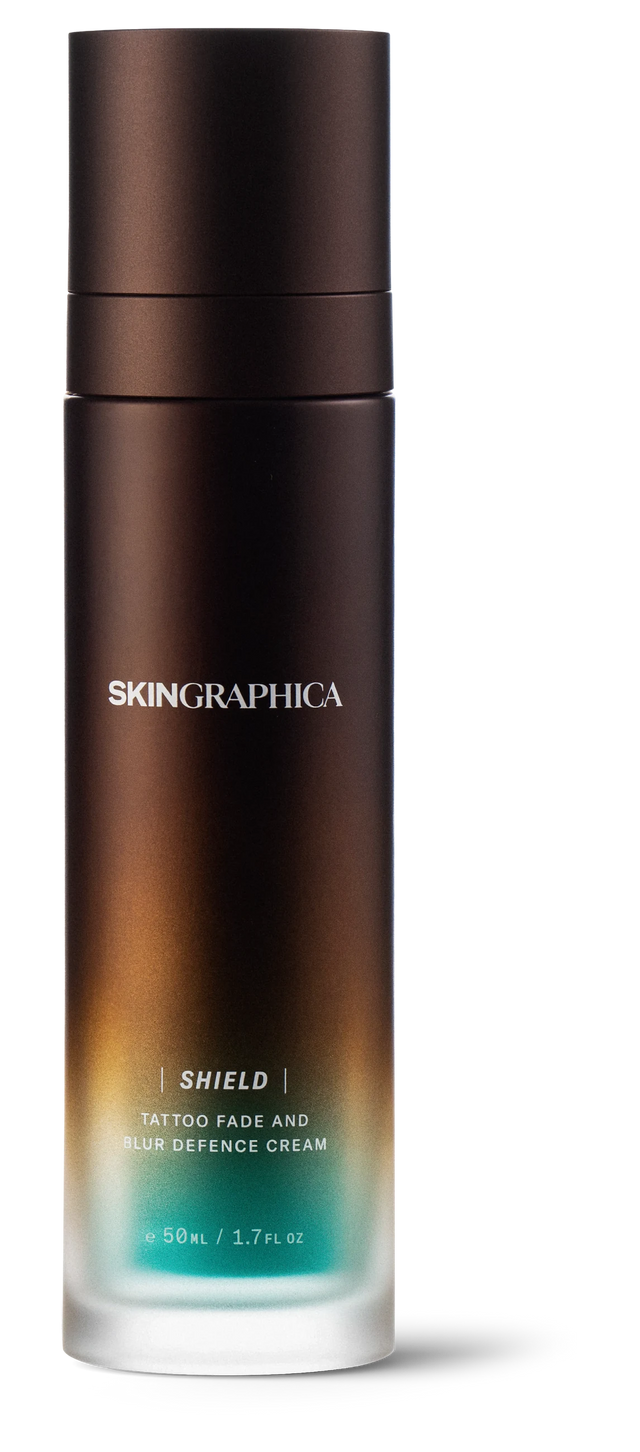
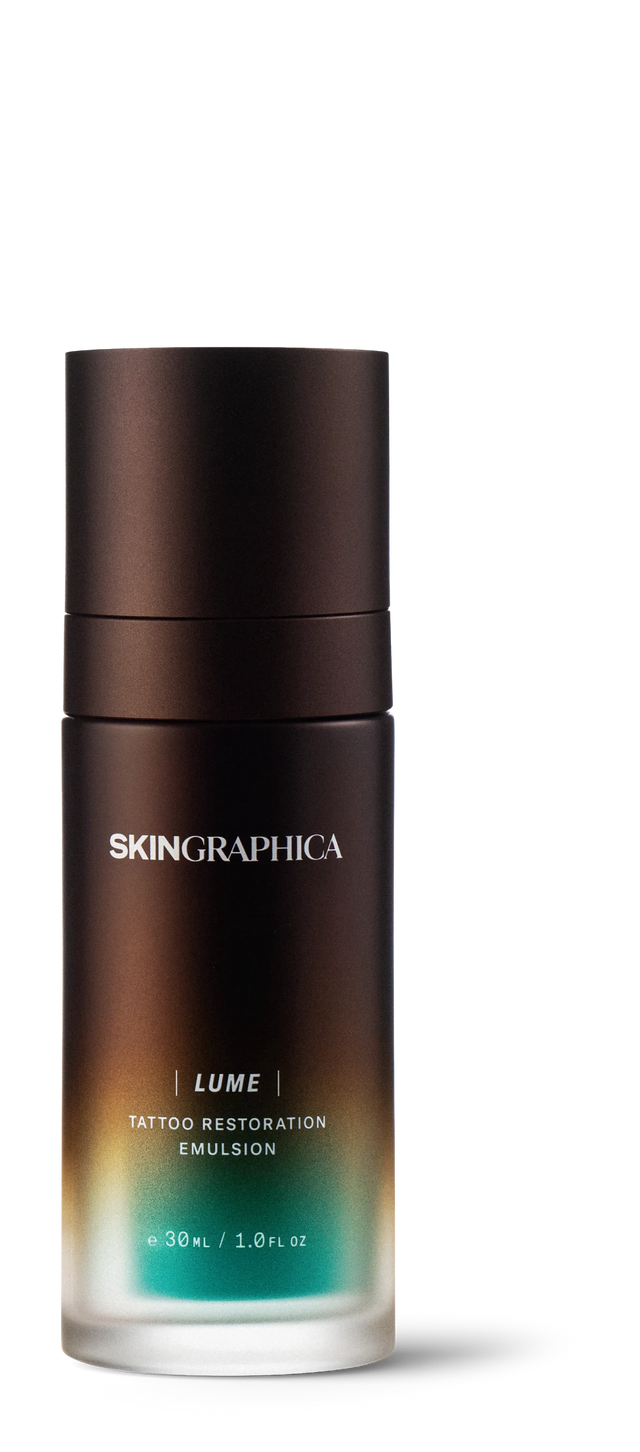
PRIME prepares the skin. LOCK cares for it through healing. SHIELD protects healed ink every day with SPF15. LUME refreshes the look of older work. Each one is Ink-Safe™.
Tattoo Preparation Serum
30 mL · 1.0 fl oz
Skin that takes ink evenly, for sharper lines and fuller colour.
5.0 (9)1.050 kr
Tattoo Ink Grip & Recovery Complex
50 mL · 1.7 fl oz
Holds pigment in place through the 14 days that decide how much stays.
4.8 (9)1.150 kr
Tattoo Fade & Blur Defence Cream
50 mL · 1.7 fl oz
Keeps healed lines sharp and colour true against everyday light.
5.0 (8)950 kr
Tattoo Restoration Emulsion
Refreshes the look of faded ink, bringing back definition and brightness.
5.0 (15)Choose a size
1.550 kr
Sources
The insights on this page draw on research into how immune cells capture tattoo pigment, dermatology experts on why tattoos last, Mayo Clinic guidance on safe aftercare and reporting on ink composition and colour ageing, including Scientific American.
This page is general information, not medical advice. If you are worried about a reaction, speak to your doctor.
Continue exploring

Academy
Why tattooed skin needs different care.
Academy
The truths of living with tattoos that rarely get said.
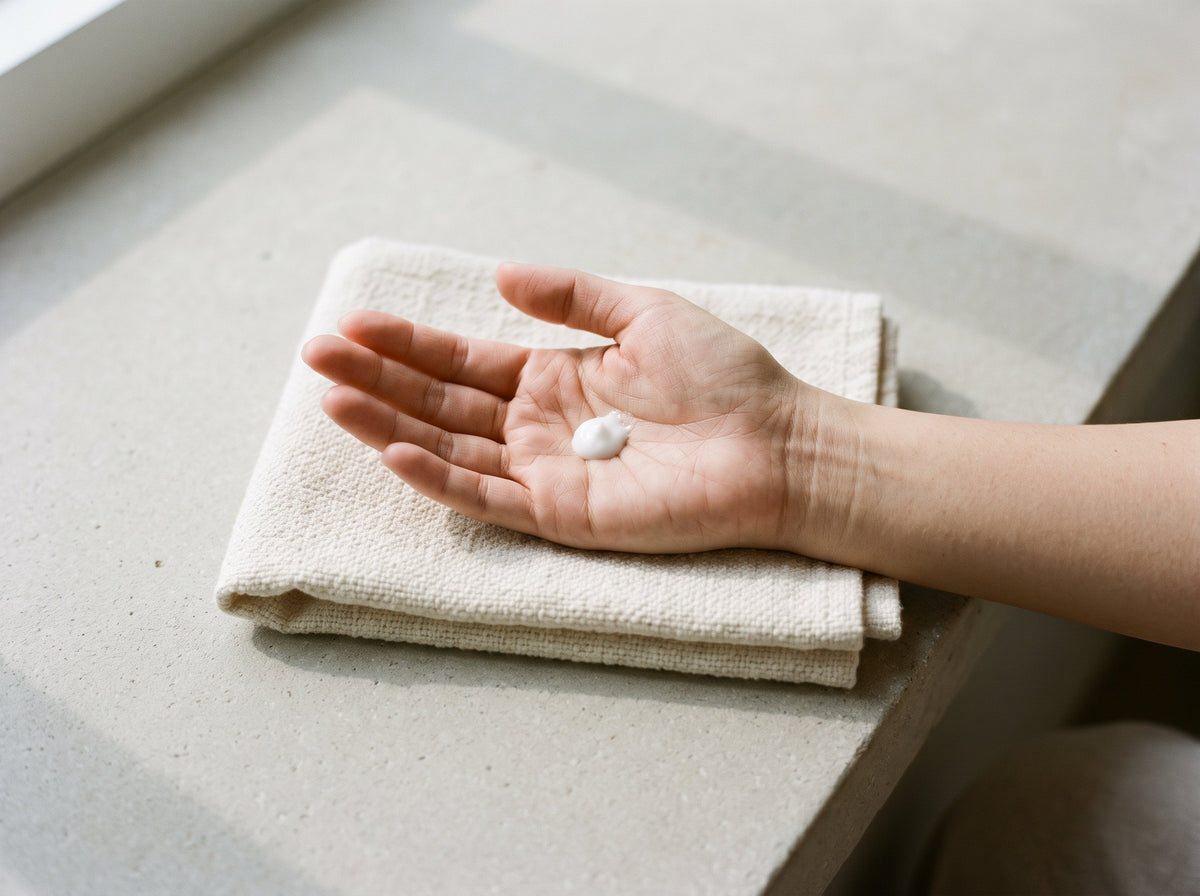
Care
What to do before, during and long after your appointment.
The SKINGRAPHICA protocol
4 Ink-Safe™ formulas, each made for one stage of your tattoo’s life. Start with the stage you are in today.
Tattoo Preparation Serum
30 mL · 1.0 fl oz
Skin that takes ink evenly, for sharper lines and fuller colour.
5.0 (9)1.050 kr
Tattoo Ink Grip & Recovery Complex
50 mL · 1.7 fl oz
Holds pigment in place through the 14 days that decide how much stays.
4.8 (9)1.150 kr
Tattoo Fade & Blur Defence Cream
50 mL · 1.7 fl oz
Keeps healed lines sharp and colour true against everyday light.
5.0 (8)950 kr
Tattoo Restoration Emulsion
Refreshes the look of faded ink, bringing back definition and brightness.
5.0 (15)Choose a size
1.550 kr
 Curated systemsEvery stage together, for less.SYSTEM, SYSTEM PLUS and SYSTEM LUX. Curated systems from 1.890 kr.View the systems