Preparing for Your First Tattoo: What You Need to Know
To prepare for your first tattoo, choose the artist before the design, look after your skin in the weeks before, skip alcohol the night before and arrive rested, fed and hydrated. How well it goes is largely decided before you sit in the chair. You will remember the studio, the artist and the moment the needle touched skin for decades. This is how to prepare so the day itself is the easiest part.
The Big Picture First Tattoo Tips Before You Even Book
Most of the regret people report from their first tattoo is not about technique or aftercare. It is about decisions made too quickly. The wrong artist, the wrong design, the wrong placement. Spend the time on the decisions and the rest gets considerably easier.
Choose the Artist Before the Design
This is the order most people get backwards. They arrive at a studio with a Pinterest board and ask the nearest available artist to recreate it. Better practice is to pick the artist whose body of work matches the aesthetic you want, then collaborate with them on the design within their style.
Look at full portfolios rather than curated highlight reels. Look for healed photos, not just fresh ones, since a tattoo can look spectacular in the chair and very different a year later. Read reviews. Visit the studio in person if you can. Cleanliness, autoclave use, organisation and how the artists treat each other and their clients tell you most of what you need to know.
Where Should I Get My First Tattoo?
For a first tattoo, lower-pain areas with stable skin are kindest. Outer upper arm, outer thigh, calf, upper back and forearm are the classic first-tattoo placements for good reason. They hurt less than ribs, sternum, hands or feet, and they heal cleanly with a normal aftercare routine.
Avoid hands, fingers, feet and the inside of the wrist for a first tattoo unless you genuinely want one there. These areas have thinner skin, more friction and faster fade. Not impossible to maintain, but harder than they look.
Choosing a Design You Will Still Want in 20 Years
You cannot fully future-proof a design choice, and trying to is its own trap. The closest you can get is choosing something that has held meaning for at least a year before you commit to it. Trends compress quickly. Meaning does not. If you have wanted the same image, in roughly the same form, for 12 months or more, the odds it will still resonate in 12 years are much better.
Pick the artist first. Design second. Placement last.
The Body How to Prepare Your Skin for a Tattoo
Well-conditioned skin is easier to work on and more comfortable to sit through. The weeks before your appointment are when this happens.
- Hydrate consistently. Pale straw-coloured urine through the day is the simplest indicator you are drinking enough.
- Moisturise the area daily with a fragrance-free product so the skin is supple but not oily on the day.
- Avoid sunburn. You cannot tattoo over sun-damaged skin, and many artists will reschedule rather than risk it.
- Do not shave the area in the 24 hours before. Your artist will shave it cleanly with a single-use blade.
- Do not exfoliate aggressively or use retinoids on the area for at least a week before.
- Eat well. Skin healing draws on nutrients including vitamin C, zinc and protein.
For a more deliberate preparation protocol, PRIME tattoo preparation serum hydrates and balances the skin so it takes ink evenly. Use it daily for the 21 days before your appointment, and if you are starting later, any days before still help. It leaves the skin hydrated and supple rather than dry, which is the state your artist wants to work on.
The Don’ts What Not to Do Before Getting a Tattoo
Can You Drink Before a Tattoo?
No. Alcohol thins the blood and increases bleeding during the appointment, and extra bleeding can push ink out and compromise the final result. Most reputable artists will refuse to tattoo someone who appears intoxicated, and many include this in their booking terms explicitly. Skip the celebratory drinks the night before. Save them for after.
The same applies to non-prescribed blood thinners. Common over-the-counter painkillers such as aspirin and ibuprofen are anti-inflammatories with mild blood-thinning effects, so avoid them in the 24 hours before. Paracetamol, known as acetaminophen in some markets, is generally the better choice if you need something that morning. If you take prescribed anticoagulants, speak to your doctor rather than stopping them on your own.
What Not to Do Before a Tattoo
- Don’t drink alcohol the night before or the morning of.
- Don’t take aspirin, ibuprofen or other NSAIDs in the 24 hours before.
- Don’t get a deep tan, sunburn or peel in the area in the 2 weeks before.
- Don’t exercise heavily the morning of. Hard training raises your heart rate and blood flow, which can mean more bleeding.
- Don’t show up on an empty stomach. Low blood sugar is a common cause of the light-headedness some first-timers feel.
- Don’t bring a large entourage. One support person at most, and check with the studio first, since many do not allow guests in the working area at all.
- Don’t haggle on price. Reputable artists charge what they charge.
The Day How to Prepare for Your First Tattoo on the Day
The day of the appointment is mostly about logistics. The work has been done in the weeks before. Just don’t undo it.
- Sleep
- Aim for a full night. Tired bodies cope with pain less well.
- Eat
- A substantial meal 1 to 2 hours before. Complex carbohydrates and protein, not just sugar.
- Hydrate
- Plenty of water through the morning. Ease off in the last 30 minutes if comfort during the appointment is a concern.
- Wear
- Loose, breathable clothing. Easy access to the area being tattooed. Dark colours hide ink stains.
- Bring
- ID, payment, water, a snack for longer appointments, headphones and something to read or watch.
- Don’t bring
- Children, pets, multiple friends or anything that pulls focus from the artist.
In the Chair What Is the Process of Getting a Tattoo?
For a first-timer, the process is more administrative and methodical than most people expect. Here is what happens, step by step.
- Consultation and consent forms. You will confirm the design, placement and size, and sign a consent form.
- Stencil application. Your artist transfers the design to your skin with a temporary stencil and asks you to confirm the position in a mirror. This is the moment to speak up. Once needle hits skin, it stays where it is.
- Setup. The artist preps the station with single-use needles, gloves, ink caps and a sterile barrier wrap.
- The first lines. The outline is usually done first. The first few seconds are the worst, and your nervous system adjusts surprisingly quickly.
- Shading and colour. Different sensations from line work. Most people find shading easier to sit through.
- Breaks. For appointments over an hour, your artist will offer breaks. Take them. Drink water, eat your snack, get up if you can.
- Cleaning and wrapping. When the work is finished, your artist cleans the area thoroughly and wraps it with cling film or an adhesive film, then gives you specific aftercare instructions.
Tipping practice varies by region. In the United States, 15% to 25% on top of the agreed price is customary for good work, usually in cash. In Australia and much of Europe, tipping is not expected, though it is always welcome. If you are unsure, ask the studio when you book.
After The Hand-Off to Aftercare
The end of the appointment is the start of the next stage, not the end of the project. The first 48 hours matter most, and we cover them in detail in our guide to the first 48 hours of tattoo aftercare. For the wider picture of healing and long-term care, the SKINGRAPHICA® complete tattoo care guide walks through every phase from studio chair to settled work.
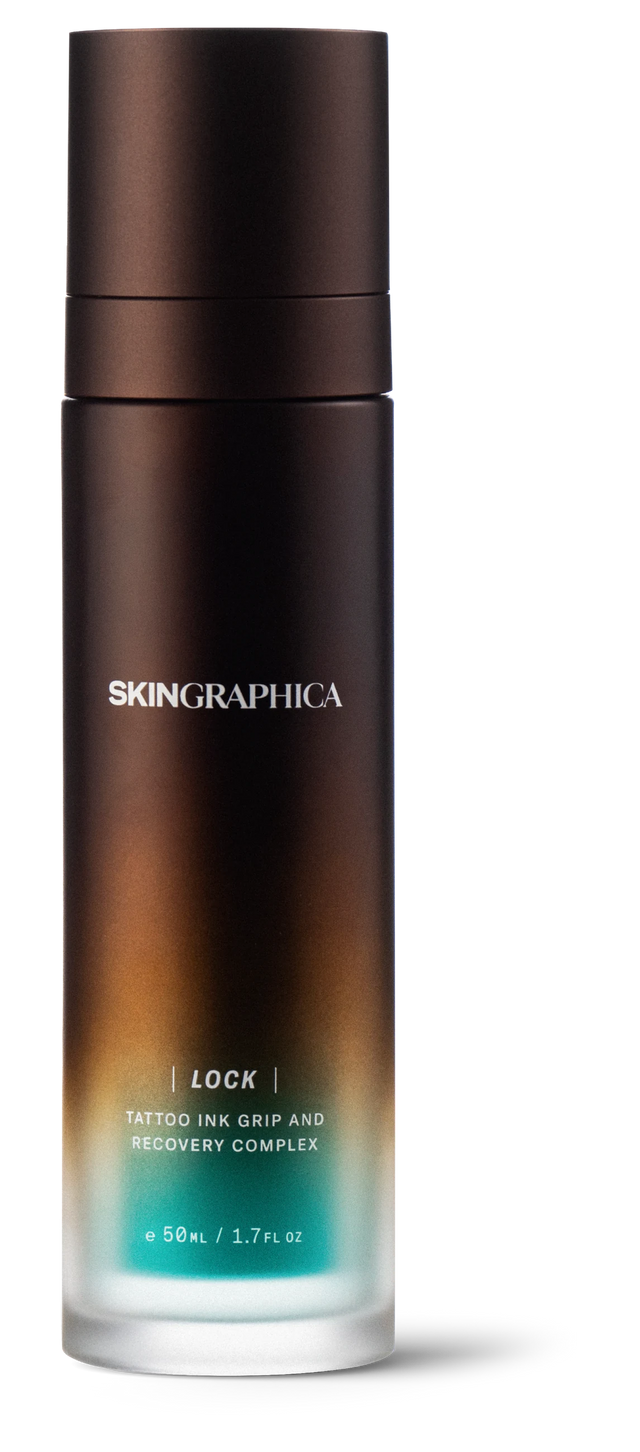
The practical point is simple. Buy your aftercare before the appointment, not after. You will want LOCK tattoo recovery complex on hand for the first wash, which happens the same evening, and for the 14 days of healing that follow. Nobody wants to be ordering skincare with a wrapped forearm.
The appointment is the easy part. The weeks before are the work.
Pick the artist before the design. Hydrate, moisturise, sleep and eat well in the weeks before. No alcohol or NSAIDs in the 24 hours before. Show up rested, fed and on time. Do those things and your first tattoo will be exactly what you hoped for, a piece of work that ages well with you.
This article reflects best-practice principles for first-time tattoo preparation and is intended as general guidance. It is not medical advice and is not a substitute for consultation with a qualified healthcare professional. Always follow the specific instructions given by your tattoo artist. Seek advice from a registered medical practitioner before booking if you have a medical condition or take prescribed medication. The same applies if you are pregnant or breastfeeding or have any concern about your suitability for a tattoo.