PRIME
Tattoo Preparation Serum
30 mL · 1.0 fl oz
Skin that takes ink evenly, for sharper lines and fuller colour.
5.0 (9)1 550 kr
Complimentary shipping over 1 950 kr. VAT and duties included.
Country/region

What happens
When ink is deposited into the dermis, the immune system recognises it as foreign. Macrophages engulf pigment particles and “hold” them in place. Over time, those cells die and pass the pigment to new macrophages. This cycle never stops.
Why it matters
Your tattoo is permanent because of this immune recycling, but it also explains why tattoos slowly fade or blur.
Surprising fact
Your body is always trying to clear your tattoo. You just don’t see it happening.
What happens
High blood sugar stiffens collagen fibres through a process called glycation. This makes skin less elastic and more prone to distortion.
Why it matters
Tattoos depend on collagen structure to hold pigment neatly. If collagen becomes brittle, tattoos may warp or blur faster.
Surprising fact
A diet high in processed sugars can age your tattoos from the inside out.
What happens
Tiny airborne pollutants (PM2.5 particles) penetrate the skin, generating free radicals. These reactive molecules damage collagen and elastin, while also degrading pigment molecules.
Why it matters
Urban pollution can make tattoos look dull and less vibrant, even if you’re diligent with SPF.
Surprising fact
Daily antioxidant care is a simple way to support skin that lives in a busy city.
What happens
After a tattoo, the skin barrier repairs while hair follicles push regrowing hairs through healing tissue. This, combined with inflammation and nerve repair, causes itching.
Why it matters
Scratching disrupts healing, risks scarring and can pull pigment out.
Surprising fact
That “tattoo itch” isn’t just dryness. It’s healing skin renewing itself, sometimes with regrowing hair adding to it.
What happens
Large, dense tattoos can slightly reduce UV penetration in those areas, which may influence vitamin D production in the skin. While not dangerous, it’s something to be aware of.
Why it matters
People with heavy tattoo coverage, especially combined with diligent SPF use, may want to ask their doctor about checking vitamin D levels.
Surprising fact
Your tattoos might block a fraction of your natural vitamin D production.
What happens
Collagen gives the dermis its structure. Dense, healthy collagen holds pigment in a stable matrix and makes tattoos look sharper. When collagen thins, tattoos look blurred.
Why it matters
Lifestyle choices (protein intake, sleep, exercise) and skincare that support collagen indirectly support tattoo clarity.
Surprising fact
Tattoos on youthful, collagen-rich skin look sharper. The right care helps support that density over time.
What happens
High-energy blue light from phones, laptops and indoor LEDs penetrates deep into skin, generating oxidative stress.
Why it matters
Blue light may accelerate pigment fade and skin ageing, even without sun exposure.
Surprising fact
Daylight carries blue light too, so daily protection matters even on days you barely notice the sun.
What happens
Tattoo pigment can obscure early warning signs like irregular moles or lesions. Dermatologists recommend full skin checks for tattooed individuals, especially with large or dark coverage.
Why it matters
Protecting your tattoos also means protecting your health.
Surprising fact
Tattoos can make it harder to spot melanoma early. Regular skin checks are essential.
What happens
As collagen and elastin break down, skin loses firmness. Tattoos can stretch, sag or distort with gravity and joint movement.
Why it matters
Skincare and lifestyle choices that slow skin ageing also help preserve tattoo geometry.
Surprising fact
Your tattoos can “migrate” over time, not because ink moves, but because your skin does.
What happens
Smoking constricts blood vessels, reducing oxygen and nutrient delivery to the skin. This slows healing and long-term repair, which impacts pigment clarity.
Why it matters
Tattoos in smokers often look more blurred, dull or aged than those of non-smokers.
Surprising fact
Lighting up doesn’t just age your face. It starves your tattoos too.
‘The Circulation Effect’
What happens
Regular exercise boosts circulation, improving nutrient and oxygen delivery to the skin. Better circulation supports tissue health and repair.
Why it matters
Sweat can irritate a fresh tattoo, but over the long term active people tend to have healthier-looking tattoos thanks to better blood flow.
Surprising fact
A healthy heart also means healthier tattoos.
What happens
Hormonal changes from pregnancy, menopause or medication affect skin thickness, hydration and elasticity. Tattoos may appear lighter or distorted during these shifts.
Why it matters
Understanding hormonal effects on skin helps manage expectations for tattoo longevity.
Surprising fact
Your tattoos can change subtly with life stages, not just with age.
What happens
Deep sleep is when growth hormone surges and tissue repair peaks. Poor sleep reduces collagen production and slows wound healing.
Why it matters
Lack of rest before or after tattooing can make tattoos heal less efficiently and age faster.
Surprising fact
Beauty sleep isn’t just about glow. It helps your skin hold its ink well.
The protocol
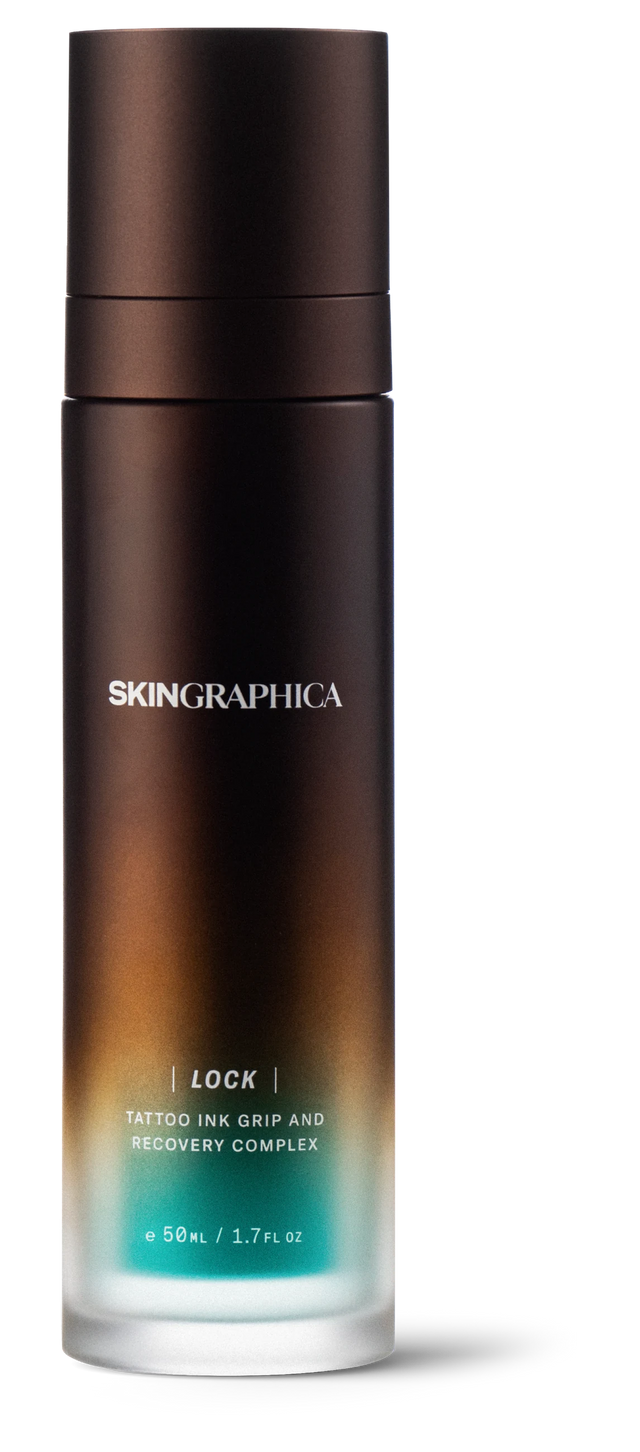
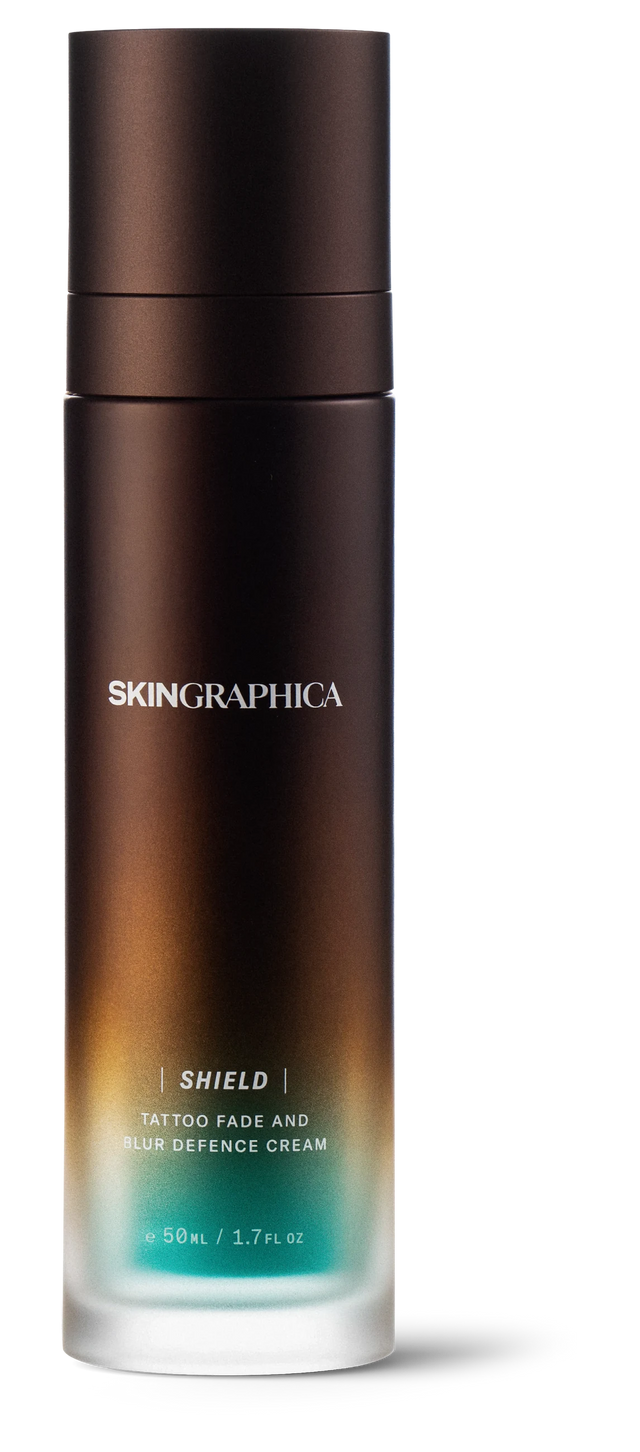
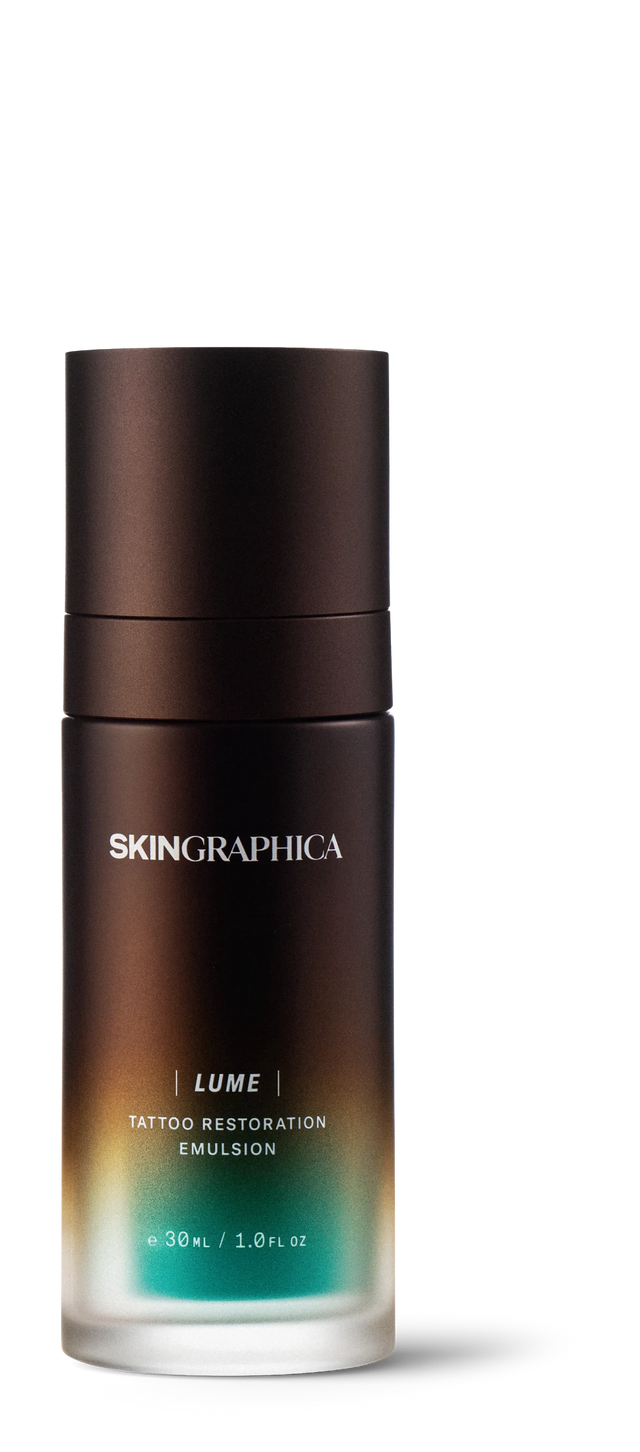
PRIME prepares the skin. LOCK cares for it through healing. SHIELD protects healed ink every day. LUME refreshes the look of older work. Each one is Ink-Safe™.
Tattoo Preparation Serum
30 mL · 1.0 fl oz
Skin that takes ink evenly, for sharper lines and fuller colour.
5.0 (9)1 550 kr
Tattoo Ink Grip & Recovery Complex
50 mL · 1.7 fl oz
Holds pigment in place through the 14 days that decide how much stays.
4.8 (9)1 650 kr
Tattoo Fade & Blur Defence Cream
50 mL · 1.7 fl oz
Keeps healed lines sharp and colour true against everyday light.
5.0 (8)1 450 kr
Tattoo Restoration Emulsion
Refreshes the look of faded ink, bringing back definition and brightness.
5.0 (15)Choose a size
2 250 kr
Continue exploring

Academy
Thousands of years of ink, from the earliest marks to today.

Academy
A guide to the styles and substyles of tattooing.
Care
What to do before, during and long after your appointment.
The SKINGRAPHICA protocol
4 Ink-Safe™ formulas, each made for one stage of your tattoo’s life. Start with the stage you are in today.
Tattoo Preparation Serum
30 mL · 1.0 fl oz
Skin that takes ink evenly, for sharper lines and fuller colour.
5.0 (9)1 550 kr
Tattoo Ink Grip & Recovery Complex
50 mL · 1.7 fl oz
Holds pigment in place through the 14 days that decide how much stays.
4.8 (9)1 650 kr
Tattoo Fade & Blur Defence Cream
50 mL · 1.7 fl oz
Keeps healed lines sharp and colour true against everyday light.
5.0 (8)1 450 kr
Tattoo Restoration Emulsion
Refreshes the look of faded ink, bringing back definition and brightness.
5.0 (15)Choose a size
2 250 kr
 Curated systemsEvery stage together, for less.SYSTEM, SYSTEM PLUS and SYSTEM LUX. Curated systems from 2 690 kr.View the systems