Academy
What Nobody Tells You
The truths of living with tattoos that rarely get said.
Complimentary shipping over 1 950 kr. VAT and duties included.
Country/region

 Stage-specific support
Preparation, recovery, long-term protection and restoration each call for different care.
 Barrier-first formulation
Tattooed skin benefits from barrier-supporting and hydrating actives that keep skin balanced while respecting the ink.
 Environmental defence
Sunscreen, antioxidants and pollution protection are not optional. They’re essential.
 Optical refinement
Gentle resurfacing and light-diffusing agents help maintain the look of crisp, vibrant ink.
 Lifestyle integration
Diet, hydration, stress, smoking and sleep all show up more visibly in tattooed skin than in untattooed skin.
Tattoo needles puncture the skin thousands of times per minute, creating a controlled trauma.
The surface heals, but the dermis never “forgets”. Pigment particles remain, held in place by immune cells.
This creates a kind of permanent immune presence. Even years later, tattooed skin has macrophages continually engulfing and passing ink between generations of cells.
This means tattooed skin is always in a subtle state of immune surveillance, unlike untouched skin.
The skin barrier (outermost lipid layer) is temporarily disrupted during tattooing. Even after recovery, the history of trauma can make tattooed skin more reactive.
Tattooed skin can feel more sensitive to harsh detergents, over-exfoliation or excessive sun exposure.
General moisturisers may help, but tattooed skin benefits from barrier-supportive actives (ceramides, panthenol, niacinamide) tailored to its history.
Tattoos are essentially optical devices under the skin.
How vibrant they look depends on 3 things.
Ordinary skincare may make skin look dewy, but tattooed skin benefits from actives that specifically enhance surface clarity and dermal resilience.
Collagen and elastin breakdown
As these fibres degrade with age, tattoos can warp or “spread”.
Gravity and mechanical stress
Tattoos across joints or skin folds distort more with repeated movement.
Pigment migration
Some pigment particles slowly shift position as tissue remodels, softening lines.
Tattooed skin ages with added visual consequences, including fading, blur and distortion. That makes prevention with SPF, antioxidants and collagen-supporting actives even more important.
Tattooed skin has a different relationship with inflammation. Sunburn, wounds or dermatitis over tattoos can cause pigment distortion or colour change.
UV and pollution create oxidative stress, which doesn’t just damage collagen but can destabilise pigment chemistry.
Tattooed skin has higher stakes when it comes to environmental defence. It’s not only about wrinkles but about protecting the pigment.
Skin cancer detection
Tattoos can obscure suspicious moles or lesions, making regular dermatologist checks essential.
Vitamin D synthesis
Dense, large tattoos may slightly reduce UV absorption, with implications for vitamin D levels in combination with diligent sunscreen use.
Systemic immune interaction
Research is ongoing, but tattoos may influence immune signalling more broadly, given the lifelong presence of pigment within macrophages.
Caring for tattooed skin isn’t just about looks. It matters for overall skin health too.
Continue exploring
Academy
The truths of living with tattoos that rarely get said.

Academy
Thousands of years of ink, from the earliest marks to today.
Care
What to do before, during and long after your appointment.
The SKINGRAPHICA protocol
4 Ink-Safe™ formulas, each made for one stage of your tattoo’s life. Start with the stage you are in today.
Tattoo Preparation Serum
30 mL · 1.0 fl oz
Skin that takes ink evenly, for sharper lines and fuller colour.
5.0 (9)1 550 kr
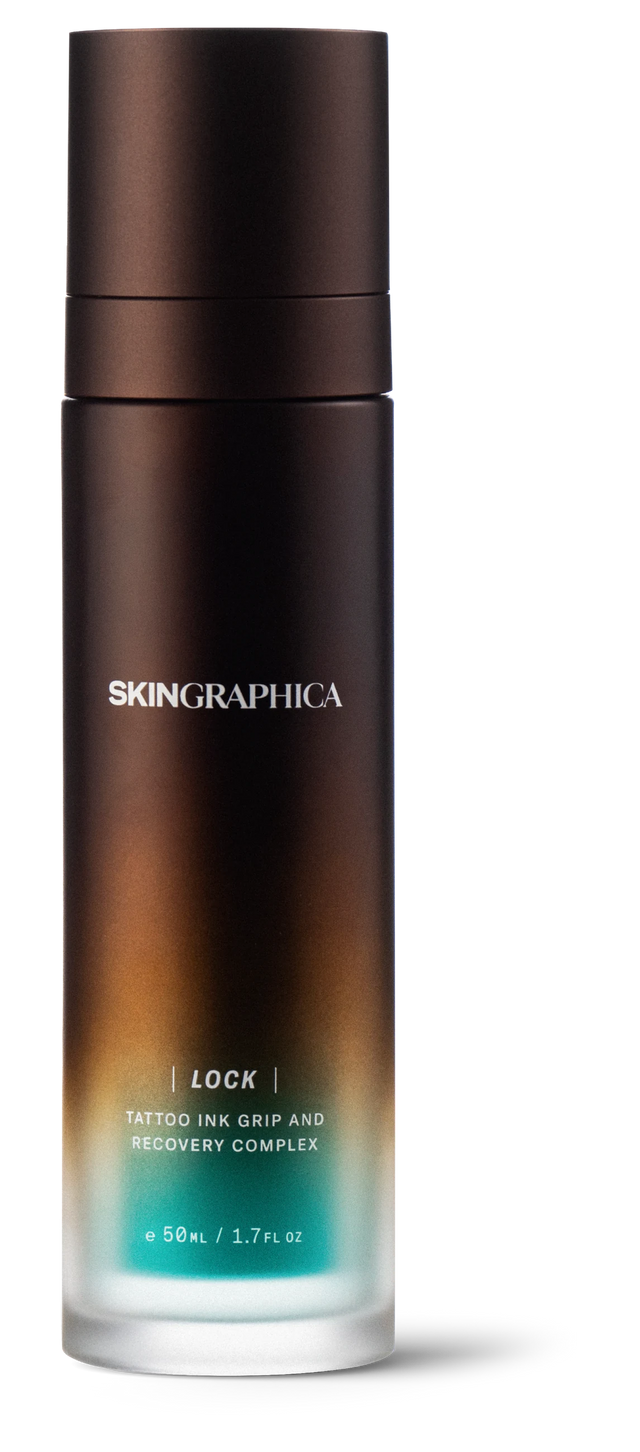
Tattoo Ink Grip & Recovery Complex
50 mL · 1.7 fl oz
Holds pigment in place through the 14 days that decide how much stays.
4.8 (9)1 650 kr
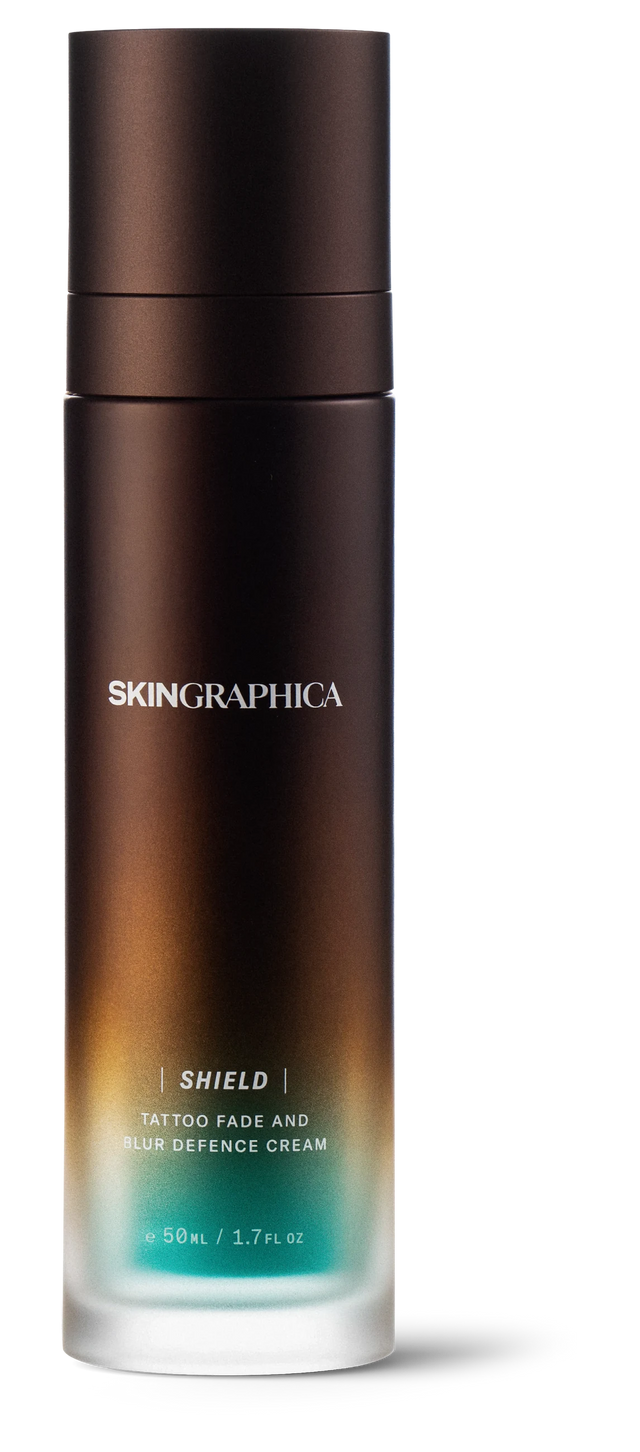
Tattoo Fade & Blur Defence Cream
50 mL · 1.7 fl oz
Keeps healed lines sharp and colour true against everyday light.
5.0 (8)1 450 kr
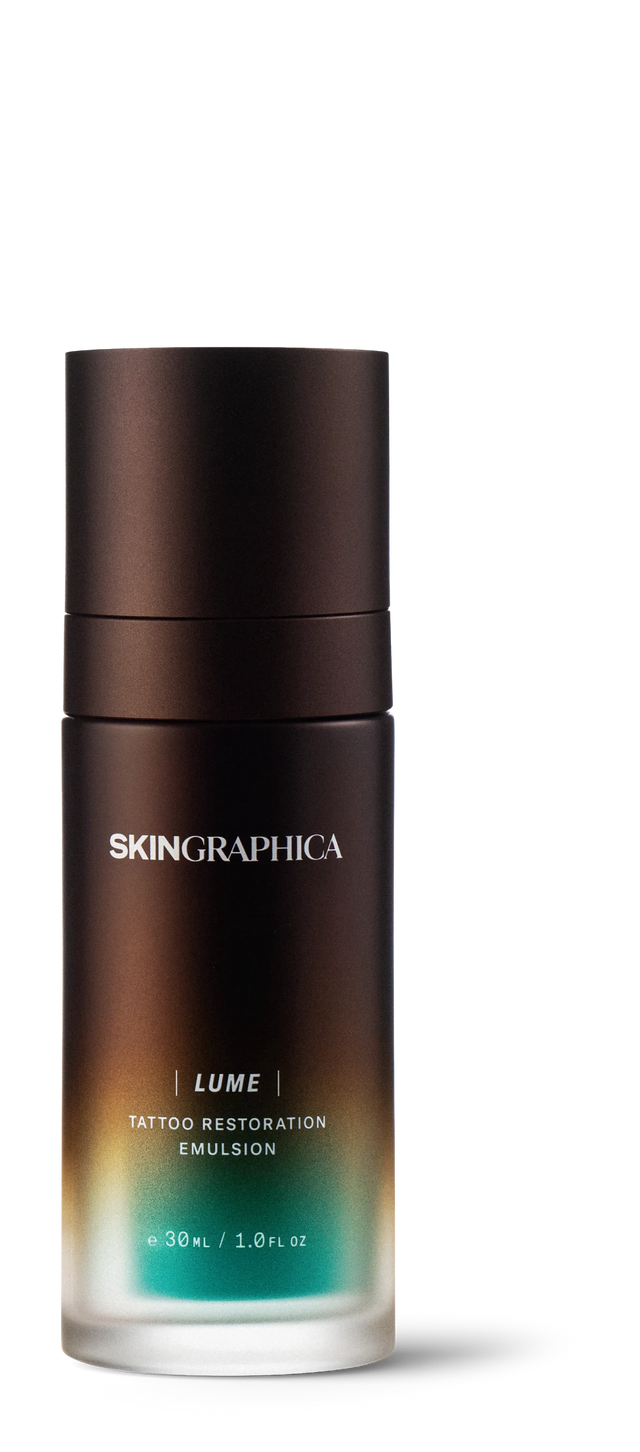
Tattoo Restoration Emulsion
Refreshes the look of faded ink, bringing back definition and brightness.
5.0 (15)Choose a size
2 250 kr
 Curated systemsEvery stage together, for less.SYSTEM, SYSTEM PLUS and SYSTEM LUX. Curated systems from 2 690 kr.View the systems