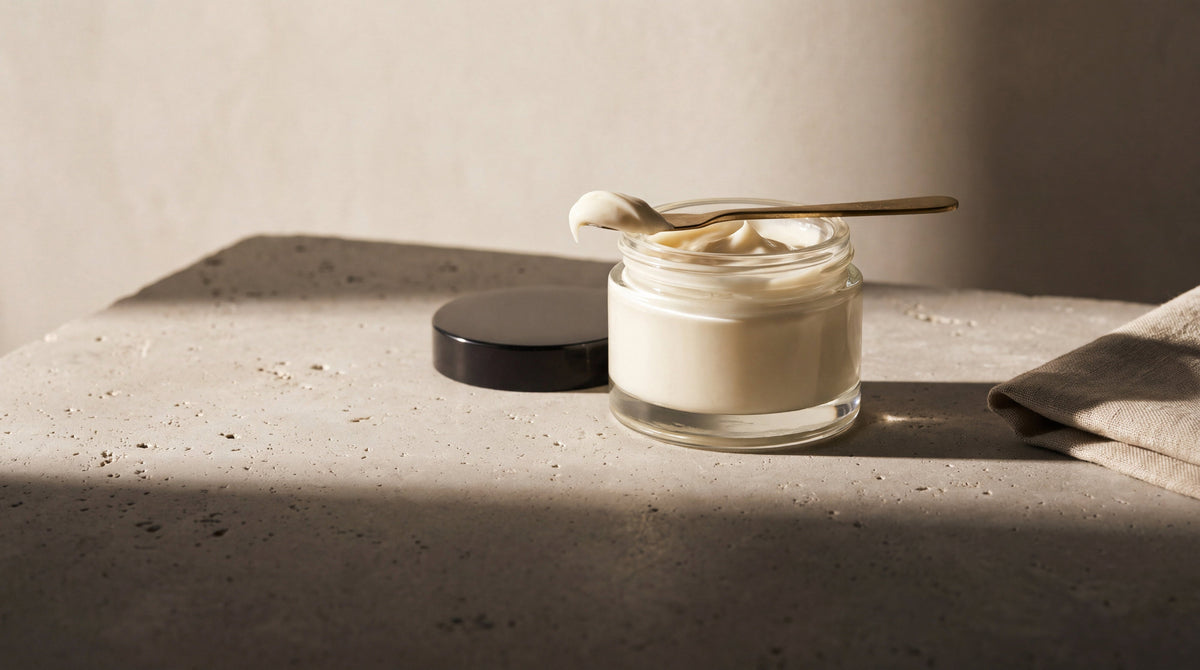
Best Cream for a New Tattoo: How to Choose
The best cream for a new tattoo is a light, fragrance-free and alcohol-free formula made for healing skin, applied thinly for the first 14 days. After that, healed skin needs something different. So the honest answer is not one product. It is the right product for the stage you are in, and the difference matters.
The Distinction Recovery Balm or Daily Cream? Why Healing and Healed Skin Need Different Products
The single most useful concept for choosing the best cream for tattoos is understanding that “tattoo cream” is not one category. There are, broadly, 3 distinct product types, and using the wrong one at the wrong stage is the most common aftercare mistake we see.
Recovery Balms
Designed for the broken-skin phase of healing, typically the first 2 weeks. These are formulated for compromised skin. They are fragrance-free, alcohol-free and light enough to absorb without occluding the wound. A thin layer is genuinely all you need. Ingredients like panthenol and allantoin support the skin barrier as it rebuilds. The texture is usually a balm or rich emulsion, applied sparingly 2 to 3 times a day.
Daily Defence Creams
Designed for healed tattoos, for ongoing daily use once the skin has fully healed. These are lighter than recovery balms and often combine moisturisation with broad-spectrum SPF. They are formulated to sit invisibly on saturated tattoo work without ghosting colour. The job shifts from healing to preservation. That means keeping the skin hydrated, protecting against UV and maintaining the vibrancy of the ink.
Restoration Treatments
A newer category, designed for mature tattoos showing fade. These are not aftercare in the traditional sense. They are formulated to refresh the look of pigment that has dulled through years of UV exposure or skin ageing. They are used periodically rather than daily.
The mistake most people make is treating the entire healing journey as one product. Generic “tattoo cream” branding suggests one cream does it all, and the ones that try inevitably compromise on every dimension. The honest framing is that healing skin and healed skin need different formulations, built differently, used differently and bought separately.
The right product at the wrong stage isn’t the right product.
The Criteria What to Look For in a Tattoo Cream
Fragrance-Free
The single most important criterion. Fragrance is a common cause of contact dermatitis in skincare, and broken skin reacts more than intact skin. Tattooed areas, particularly over saturated colour work, can be more reactive long after the surface has healed. A fragrance-free formulation removes a meaningful and avoidable source of irritation risk.
Alcohol-Free
Many body lotions contain denatured alcohol or alcohol-based solvents. These dry the skin, sting on broken or sensitive areas and can compromise the skin barrier rather than support it. Avoid anything with alcohol high in the ingredient list.
Designed for Compromised or Sensitive Skin
Products formulated for sensitive, broken or post-procedure skin tend to share useful properties. They have a low irritant load, supportive ingredients and no aggressive actives. These are the formulations to look for during healing, whether or not they are explicitly branded as tattoo aftercare.
Light Enough to Apply Thinly
Heavy occlusive products like petroleum jelly create a barrier that can trap moisture and bacteria against the wound. Current best practice favours lightweight formulations applied in thin layers, which support the skin’s own barrier function rather than replace it. The texture of the right tattoo cream is more emulsion than ointment.
Pigment-Safe Ingredient Profile
Some skincare ingredients may interact with tattoo pigment over years of repeated exposure, particularly alpha hydroxy acids and high-strength retinoids. A good tattoo cream is built around an ingredient profile assessed for compatibility with tattoo ink. This becomes especially important for daily-use products applied for decades.
Why a Daily Tattoo Cream Should Include SPF
Once a tattoo has healed, the single most valuable thing you can do for it is daily broad-spectrum SPF. The most realistic way most people achieve this is a daily moisturiser that includes SPF, so they are protected without having to layer 2 products every morning. A daily tattoo cream that includes broad-spectrum SPF is simply more likely to actually be worn.
Avoid Ingredients to Avoid in Tattoo Aftercare
- Petroleum jelly and petroleum-heavy ointments. Occlude too fully, trap heat and may slow surface healing.
- Fragrance, including “natural” essential oils. A common irritant in skincare. Bergamot, lavender and citrus oils are common offenders.
- Alcohol high in the ingredient list. Drying and stinging on healing skin.
- Antibacterial ointments like Neosporin. Not appropriate for tattoo aftercare unless a doctor advises it. The actives are too harsh for healing skin, and overuse can contribute to antibiotic resistance.
- Hydrocortisone or steroid creams. Can dampen the normal inflammatory response that is part of healing. Use only if a doctor advises.
- Coconut oil, shea butter or other “natural” oils as a primary aftercare product. Often too heavy, and offer no antimicrobial benefit despite the marketing.
- Active skincare ingredients. Retinoids, alpha hydroxy acids, salicylic acid and vitamin C serums are all inappropriate for healing tattooed skin.
- Anything heavily marketed as “soothing” with strong scent or visible essential oils. The marketing rarely matches the formulation chemistry.
Stage by Stage The Right Cream for Each Phase
Days 1 to 14 · The Best Cream for a Healing Tattoo
This is the phase where product choice matters most, and where generic body lotions cause the most harm. The skin is broken, sensitive and actively rebuilding its barrier. The cream you reach for now should be formulated specifically for this state.
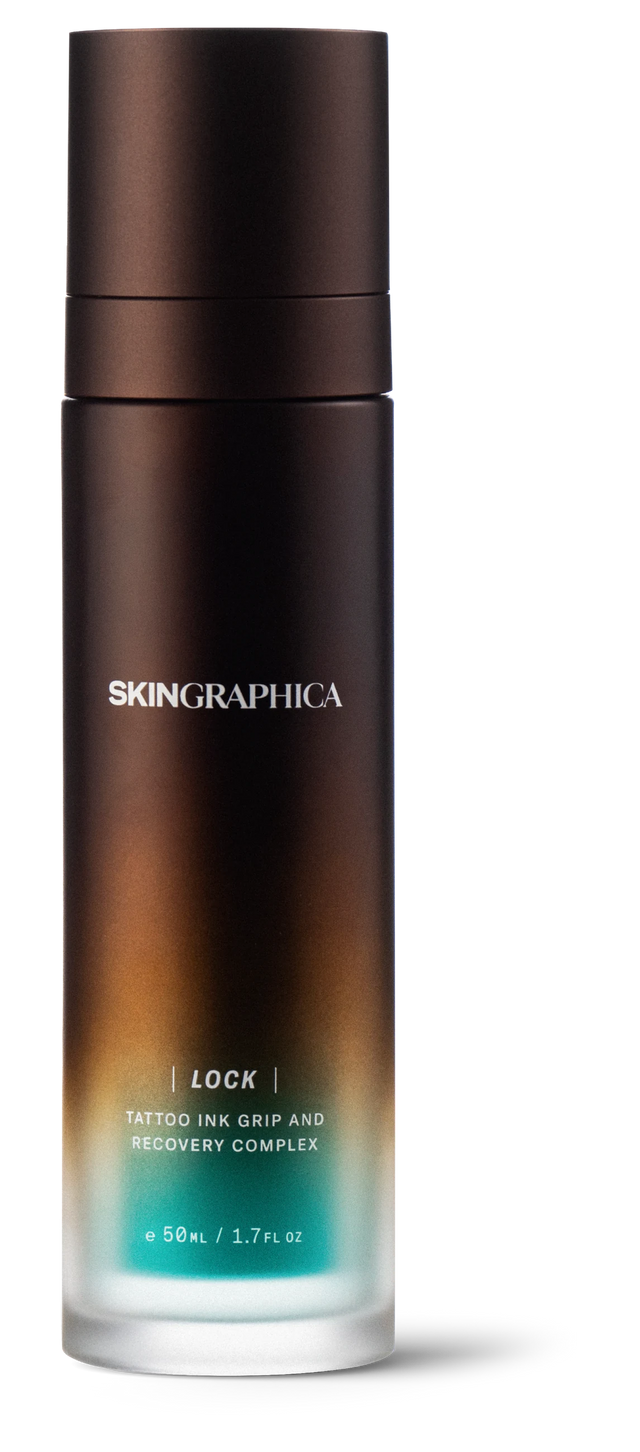
LOCK Tattoo Ink Grip & Recovery Complex is made for exactly this phase, the 14 days of healing once the covering is off. It is light enough to absorb without occluding, and it is fragrance-free and alcohol-free to avoid the most common irritation triggers. A thin layer 2 to 3 times a day is all you need. It cares for the skin and helps keep it hydrated while it heals. It is built on a simple idea. Healing skin needs less, not more.
The mistake we see most often at this stage is over-application. People reach for a generic body lotion thinking more must be better, apply heavily and trap moisture against the wound. The right product applied thinly outperforms the wrong product applied liberally every time.
Days 14 to 30 · Moving From Recovery to Daily Care
By weeks 2 to 3, the surface heal is largely complete. The skin no longer needs the broken-skin formulation of a recovery balm. This is the point to move to a daily moisturiser, ideally one that also addresses the next phase of the journey, which is fade prevention.
This transition is where most people fall off. They run out of recovery balm, default to whatever body lotion is in the cabinet and lose the formulation discipline that protected the early heal. The result is years of generic moisturiser on tattooed skin, which is fine, but it leaves the largest single longevity gain on the table. That gain is daily SPF.
Day 30 Onwards · Daily Protection for a Healed Tattoo
From week 3 or 4 onwards, the conversation shifts from healing to preservation. The skin is healed, and the priority is now keeping the work looking its best for decades. At this stage, 2 things matter most. They are hydration and UV protection.
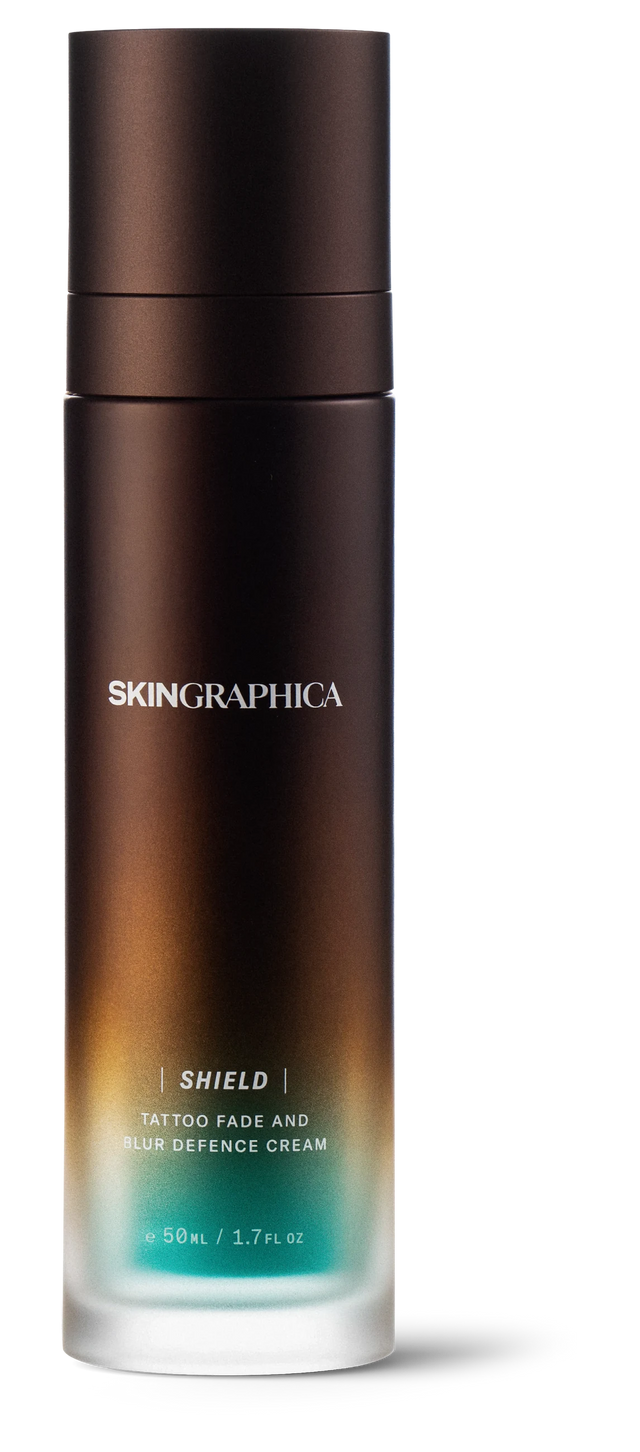
SHIELD tattoo defence cream combines both in a single daily product. It is a broad-spectrum SPF15 with organic filters, formulated for healed tattooed skin and built to sit invisibly on saturated work without the white cast that can ghost colour and depth.
The SPF15 is a deliberate trade-off. Higher-SPF products tend toward heavier formulations that get worn less often, and an SPF worn every day protects more than a higher factor left in the bathroom cabinet. SHIELD is made for that daily reality, the incidental exposure of an ordinary day. It is not a substitute for a dedicated sunscreen. Use SPF50+ for long days outdoors, beach days and swimming.
Long Term · Caring for Older, Faded Tattoos
For tattoos that have already lost some of their original brilliance through years of UV exposure and skin ageing, as many do after a decade or more, the conversation moves to restoration.
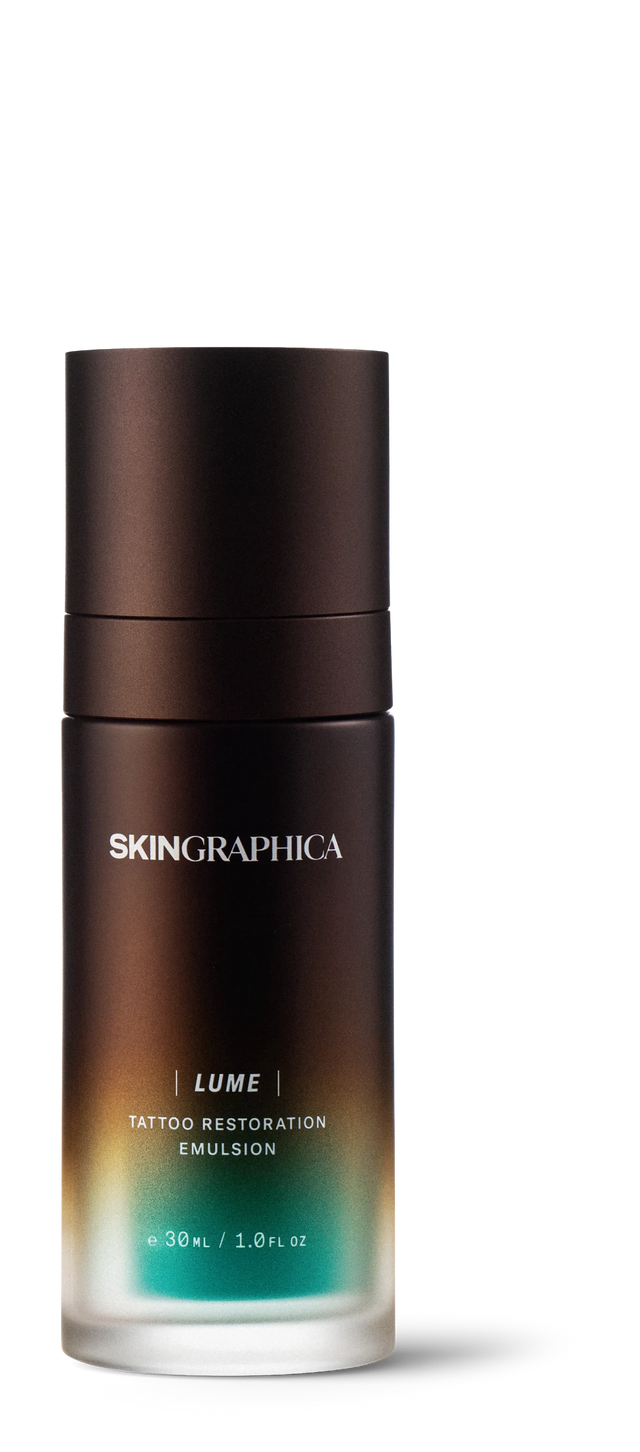
LUME tattoo restoration emulsion refreshes the look of older or faded ink, bringing back the look of definition and brightness without going back to the needle. It works gradually and gently, without disturbing the original work. It does not re-pigment the skin or reverse fading.
Not every tattoo is a LUME candidate. Some genuinely need a skilled touch-up artist. The Fade Checker on the LUME product page offers an honest visual guide to whether your tattoo suits LUME or whether a touch-up is the better path.
Before Your Appointment How to Prepare Your Skin Before a Tattoo
Tattoo care doesn’t begin on the day of your appointment. Well-prepared skin is hydrated and balanced, so it takes ink more evenly and gives the work a better start. A preparation protocol in the 21 days before your appointment is one of the simplest decisions you can make for the long-term result.
PRIME tattoo preparation serum is made for exactly this window. Used daily for the 21 days before your appointment, though any days before still help, it hydrates and balances the skin so it takes ink evenly. That is the foundation of a tattoo that ages well. It is not a magic step, but it gives the work a better start from day 1. Most people never think about preparation at all. Those who do give their artist better skin to work with.
Quick Reference Which Tattoo Cream to Use, and When
- Before your appointment
- Tattoo preparation serum. PRIME daily for the 21 days before your appointment.
- Days 1 to 14
- Recovery balm. LOCK, applied thinly 2 to 3 times a day.
- Days 14 to 30
- Transition phase. Finish your LOCK, then introduce SHIELD once the skin has fully healed.
- Day 30+
- Daily defence cream. SHIELD every morning. Use SPF50+ for long days outdoors.
- Faded older work
- Restoration emulsion. LUME, used periodically to refresh the look of faded ink. Check suitability with the Fade Checker first.
For the wider context of healing, see our complete guide to how long a tattoo takes to heal, the foundational guide to tattoo aftercare and the deep dive on sunscreen lotion for tattoos.
After the appointment, a tattoo needs 3 creams across its life. Each does one job well.
The best cream for a new tattoo is the one designed for the stage you are in. A purpose-built recovery balm for the first 2 weeks. A daily defence cream once the skin has healed, for life. A restoration emulsion if and when fade sets in years from now. Products that try to be all 3 at once rarely do any of them well.
This article reflects dermatological best-practice principles and is intended as general guidance on selecting tattoo aftercare products. It is not medical advice and is not a substitute for consultation with a qualified healthcare professional. If you have specific skin concerns, allergies or sensitivities, or if your healing tattoo is showing any signs of complication, seek advice from a registered dermatologist or medical practitioner before making product decisions.