Is My Tattoo Infected? Warning Signs and What to Do
An infected tattoo usually gets worse day by day, with spreading redness, growing pain, pus, heat or fever, while a healing tattoo steadily improves. A new tattoo will look red, feel warm and may swell in the first few days, and that is normal. The difference matters because tattoo infections can progress quickly.
Critical Note What This Article Is, and Is Not
This is a guide to recognising the signs of a tattoo infection so you can seek medical help promptly. It is not a diagnostic tool and it is not medical advice. If you suspect your tattoo may be infected, the right move is always to contact a registered medical practitioner or dermatologist. Tattoo infections range from minor and easily treated to medical emergencies, and only a doctor can make that determination for you.
That said, knowing what is normal and what is not lets you act faster when something is wrong, and acting early can be the difference between a straightforward course of treatment and a serious complication.
Normal Healing What a Healing Tattoo Should Look Like
Before you can identify infection, you need a clear picture of what normal looks like at each stage. Here is the reference baseline.
Days 1 to 3 · Normal Inflammation
What to expect. Redness around the tattoo, warmth, mild swelling, tenderness when touched, plasma weeping (clear or slightly yellow fluid), some bleeding in the first 12 hours and scabbing beginning to form. The skin will look angry. This is the inflammatory phase doing exactly what it should be doing.
Not normal. Red lines or streaks moving away from the tattoo, swelling that visibly extends well beyond the tattooed area, thick yellow or green pus or a fever above 38°C / 100.4°F.
Days 4 to 7 · Settling
What to expect. Redness easing, swelling reducing, plasma production tapering off, scabs forming and lifting at the edges and the tattoo looking less raw and more like a tattoo. The skin should look noticeably better at the end of week 1 than at the start.
Not normal. Any of the above symptoms worsening rather than improving, pain increasing instead of easing or new symptoms that were not present in the first 3 days.
Days 7 to 14 · Peeling Phase
What to expect. Flaking and peeling skin, a dry-looking surface, intense itching that peaks around days 7 to 10 and the tattoo looking duller and slightly cloudy as the dead skin sheds. This is the heaviest phase of the healing experience for most people.
Not normal. Peeling skin that is wet rather than dry, weeping that continues past days 5 to 7, persistent or new heat in the area or a rash spreading across the tattoo surface.
Day 14 Onwards · Surface Healed
What to expect. The surface looks like normal skin, the redness has gone, the peeling has finished and the tattoo has settled into its near-final appearance. Some shininess to the new skin underneath is normal and fades over the following weeks.
Not normal. Any redness, warmth or new sensitivity reappearing after the surface has clearly healed. Late-onset infection is uncommon but possible, particularly after water exposure.
Healing improves day to day. Infection gets worse.
The Warning Signs How to Tell If a Tattoo Is Infected
The single most useful question to ask yourself every day during the first 2 weeks is simple. Is this better, the same or worse than yesterday? Healing follows a curve of steady improvement. Infection follows a curve of progression. Redness spreads, pain grows, new symptoms appear.
The warning signs that should prompt a phone call to your doctor or a same-day medical appointment include the following.
- Spreading redness. A halo of red that extends well beyond the tattooed area, particularly if it is growing day to day. Some redness immediately around the tattoo is expected. Redness expanding outward is not.
- Red streaks radiating away from the tattoo. This can indicate a developing infection of the lymphatic vessels and is a reason to seek medical advice the same day.
- Worsening pain. Discomfort that is increasing after day 3, rather than easing as it should be.
- Heat that persists. The tattoo feels hot to the touch and stays that way through the day, beyond the first 48 to 72 hours.
- Discharge that is yellow, green or foul-smelling. Clear to pale-yellow plasma is normal in the first few days. Thick, opaque or smelly discharge is not.
- Fever, chills or fatigue. Systemic symptoms suggest the infection has moved beyond local skin involvement.
- A raised, bumpy rash. Hives or a papular rash across the tattoo can indicate an allergic reaction to the ink, distinct from infection but also requiring medical attention.
- Hardened or tender lumps under the skin. Particularly if they are warm, growing or accompanied by other symptoms.
The Causes Types of Tattoo Infection
Not every concerning symptom is a bacterial infection. Knowing the rough categories helps you describe what you are seeing to a doctor.
Bacterial Infection
The most common type. Usually caused by Staphylococcus or Streptococcus bacteria entering the broken skin during or after the appointment. Typical signs are increasing redness, swelling, warmth, pus and pain, usually 3 to 10 days after the appointment. Usually treatable with prompt medical care.
Allergic Reaction
A reaction to the tattoo ink itself, most commonly to red and yellow pigments. Typical signs are an itchy, raised, bumpy rash across the tattooed area, often cleanly following the tattoo’s outline. It can appear days to years after the tattoo. Requires medical assessment to manage.
Mycobacterial Infection
Less common but increasingly reported, often linked to contaminated ink or water exposure during healing. Typical signs are a delayed onset of weeks to months and a slow-developing rash or small bumps across the tattoo, which often do not respond to standard antibiotics. Always requires specialist medical care.
Contact Dermatitis
A reaction to a product applied during aftercare, commonly to fragrance, alcohol or preservatives in unsuitable lotions. Typical signs are itchy, dry, irritated skin where the product was applied, easing when the product is stopped. This is one reason fragrance-free, alcohol-free, tattoo-specific aftercare matters.
What to Do Steps to Take If You Suspect Infection
If you think your tattoo might be infected, the steps are simple and the order matters.
- Photograph the tattoo, ideally in good natural light. This gives you a baseline to compare against day to day and provides documentation for medical assessment.
- Stop applying any product that might be contributing, particularly anything fragranced, anything containing alcohol or anything not formulated for healing skin.
- Continue washing gently with a fragrance-free cleanser. Do not stop hygiene routines.
- Contact your tattoo artist. They have seen many heals and can often tell you whether what you are describing is normal. They are not a substitute for a doctor, but they are a useful first sounding board.
- Contact a doctor or pharmacist. For mild concerns, a GP, pharmacist or telehealth consult is often a good start. For any of the warning signs above, seek same-day medical attention.
- Do not self-treat with leftover antibiotics, unprescribed creams or home remedies. Improperly used antibiotics can make infections harder to treat and contribute to resistance.
Prevention Reducing Your Risk From the Start
Many tattoo infections are preventable. The risk factors are well established, and they are largely within your control.
Choose your studio carefully. Reputable studios with strict hygiene standards and proper sterilisation practices carry substantially lower risk than unlicensed operations. Visit before you book. Look for clean surfaces, sealed needle packaging, autoclave use and barrier wrap on the tattoo machine.
Follow aftercare instructions consistently. Many infections trace back to either a hygiene lapse during the appointment or an aftercare lapse in the days that followed. Wash gently 2 to 3 times a day. Apply only product formulated for broken skin.
Use products intended for healing skin. A common aftercare error is reaching for an inappropriate lotion, usually a scented body cream, a petroleum-heavy ointment or an antibacterial product never intended for a healing tattoo. Each of those introduces irritation risk, and irritated skin is more vulnerable.
Avoid water exposure. Pools, baths, hot tubs, lakes and the ocean can all introduce bacteria to a healing wound. See our guide on swimming with a new tattoo for the full timeline.
Don’t pick or scratch. Each disturbance to the healing surface is a new infection opportunity. The itch peaks around days 7 to 10 and is the most common point at which people compromise their own healing.
For the wider context, see our complete guide to how long a tattoo takes to heal and the SKINGRAPHICA® care guide.
Healing improves day to day. Anything else is a reason to call a doctor.
Some redness, swelling, warmth and tenderness in the first few days is normal. Anything that is worsening rather than improving is a reason to see a doctor or pharmacist. That includes spreading redness, growing pain, fever, pus and red streaks. Tattoo infections are usually straightforward to treat when caught early. Trust your instincts. If something feels wrong, get it checked.
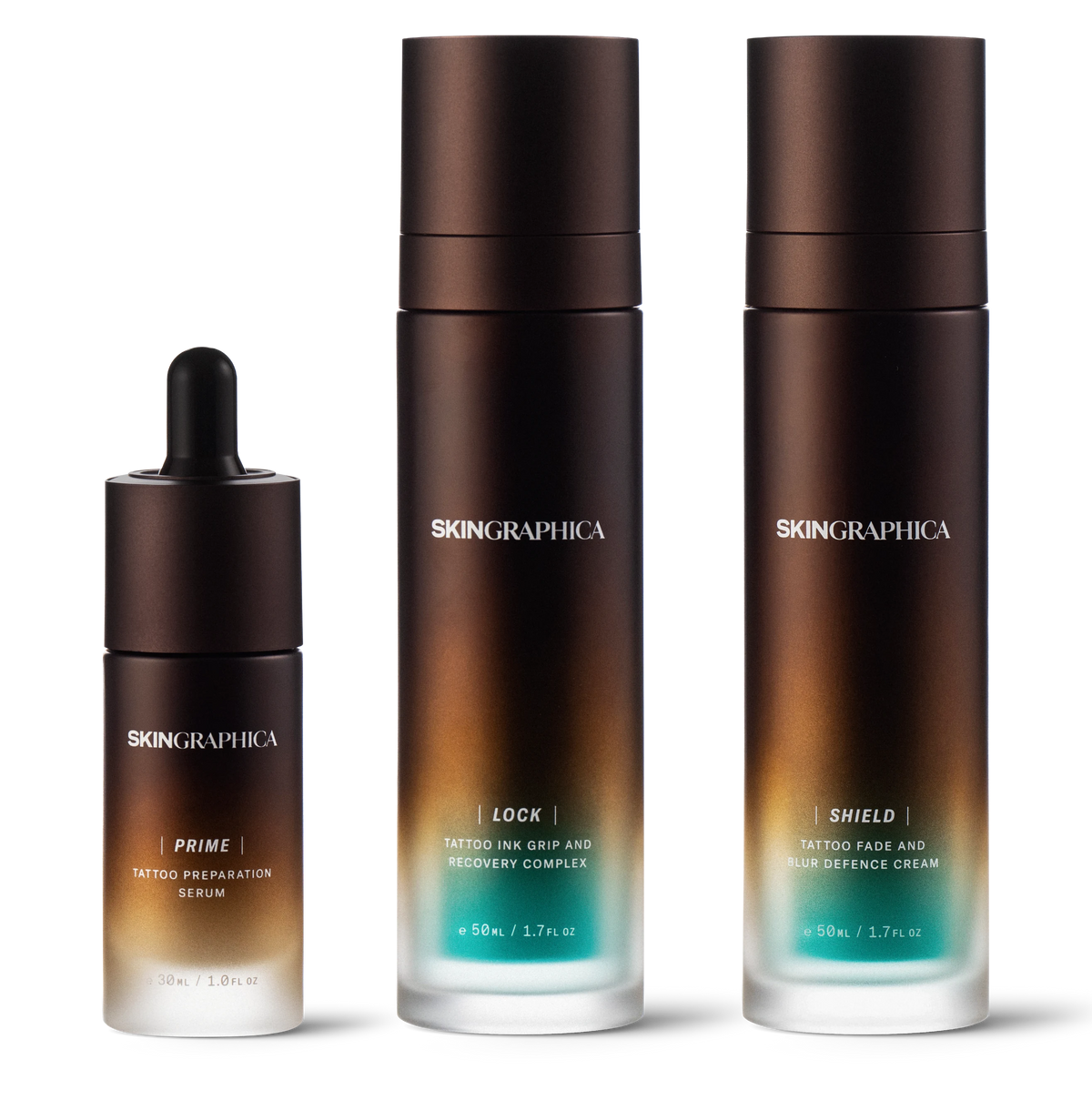
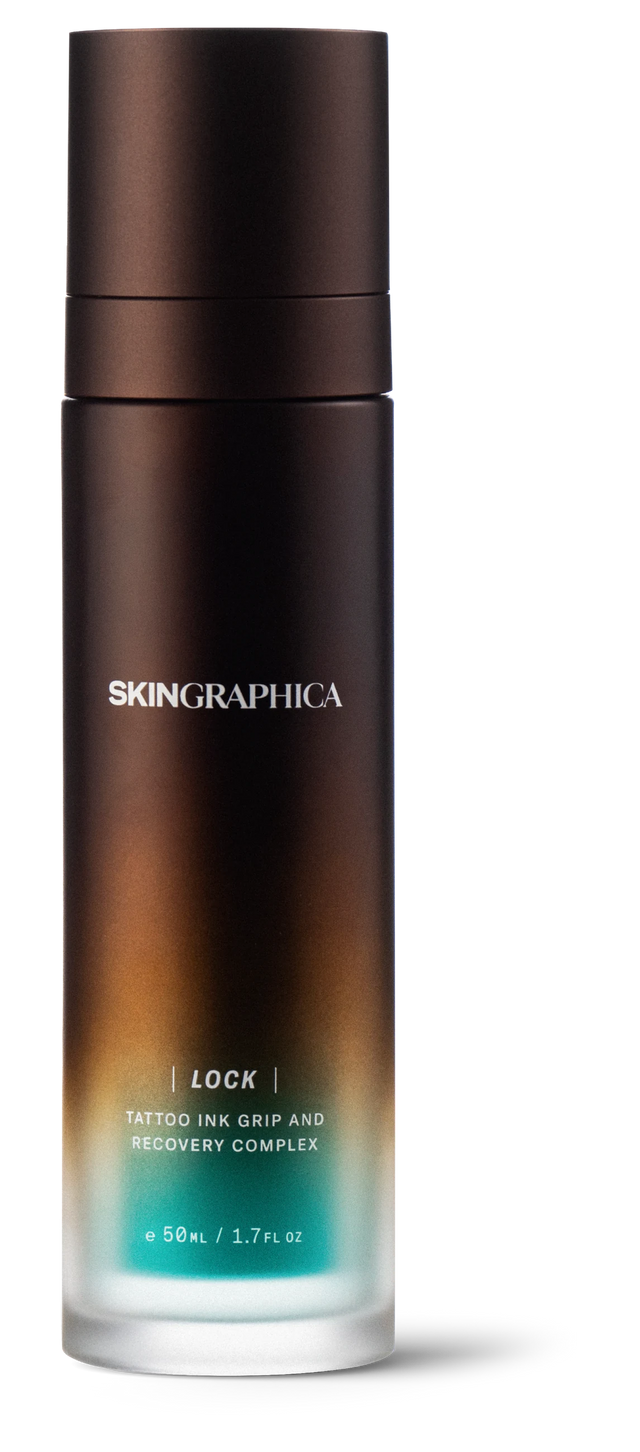
If a doctor has confirmed your tattoo is healing normally, or once a treated infection has cleared, LOCK Tattoo Ink Grip & Recovery Complex is formulated for the 14 days of healing. It is fragrance-free, alcohol-free and light enough to absorb without occluding. It cares for the skin and helps keep it hydrated while it heals. It does not treat infection and it is not a substitute for medical care.
This article is a general reference to help readers recognise the difference between normal healing and signs that warrant medical attention. It is not a diagnostic tool and is not a substitute for advice from a qualified healthcare professional. It has not been reviewed by a medical practitioner. If you suspect your tattoo may be infected, or notice any symptom that concerns you, contact a registered medical practitioner or dermatologist promptly. In the case of high fever, spreading red streaks, difficulty breathing or facial swelling, seek emergency medical care immediately.